

TL;DR
Finding the best AI for writing research papers involves choosing a specialized assistant that goes beyond simple text generation. Top tools like Paperpal, Jenni.ai, and SciSpace are designed specifically for academic work, offering features such as advanced grammar checks, contextual suggestions, literature discovery, and precise citation management. Unlike general-purpose AI, these platforms streamline the research process, helping you enhance clarity, avoid plagiarism, and prepare manuscripts for publication with greater efficiency.
Understanding the Role of AI in Academic Writing
Artificial intelligence tools for academic writing are not designed to write your research paper for you. Instead, they act as sophisticated assistants that augment your skills and streamline tedious aspects of the writing process. These platforms leverage machine learning and natural language processing to help you refine language, organize sources, and strengthen your arguments. Their primary role is to support, not replace, the critical thinking, original research, and intellectual insight that are the hallmarks of academic work.
The functions of these tools are diverse and specialized. Some, like Grammarly, focus on high-level grammar, tone, and clarity suggestions. Others, such as Paperpal, are tailored for the nuances of scientific and academic language, providing edits that align with journal submission standards. Tools like Jenni.ai and SciSpace integrate writing assistance with research discovery, helping you find relevant papers, extract key insights, and generate citations seamlessly. This functional diversity means you can select a tool that addresses your specific pain points, whether it's polishing prose as a non-native English speaker or managing a complex literature review.
A common question is whether AI can write an entire research paper from scratch. While some tools can generate full drafts, doing so raises significant ethical concerns and is often against university policies. The most effective and ethical use of AI is for tasks like brainstorming, summarizing complex articles, improving sentence structure, and checking for grammatical errors. Relying on AI to generate core ideas or fabricate data is a misuse of the technology. To use these tools responsibly, follow these guidelines:
- Use for Assistance, Not Creation: Let AI help you polish your own ideas, not create them for you. Use it to refine your language, check grammar, and format citations.
- Verify Everything: AI can make mistakes. Always double-check AI-generated summaries, data interpretations, and citations against the original sources to ensure accuracy.
- Disclose Your Use: Be transparent about which AI tools you used and for what purpose, adhering to the policies of your institution and the journal you are submitting to.
- Maintain Your Voice: Ensure the final manuscript reflects your unique authorial voice and intellectual contribution. Over-reliance on AI can lead to generic and uninspired writing.
Key Features in an AI Research Writing Tool
When evaluating the best AI for writing research papers, it's crucial to look beyond basic grammar checks. The most valuable tools offer a suite of features specifically designed to tackle the unique challenges of academic writing. Focusing on these key capabilities will help you choose a platform that genuinely enhances your research workflow and improves the quality of your manuscript.
A powerful AI writing assistant should provide comprehensive support throughout the research lifecycle, from literature discovery to final submission. Prioritize tools that offer a balanced combination of language refinement, research management, and ethical safeguards. By understanding what to look for, you can select a partner that helps you articulate your findings with precision and confidence.
Consider the following essential features when making your decision:
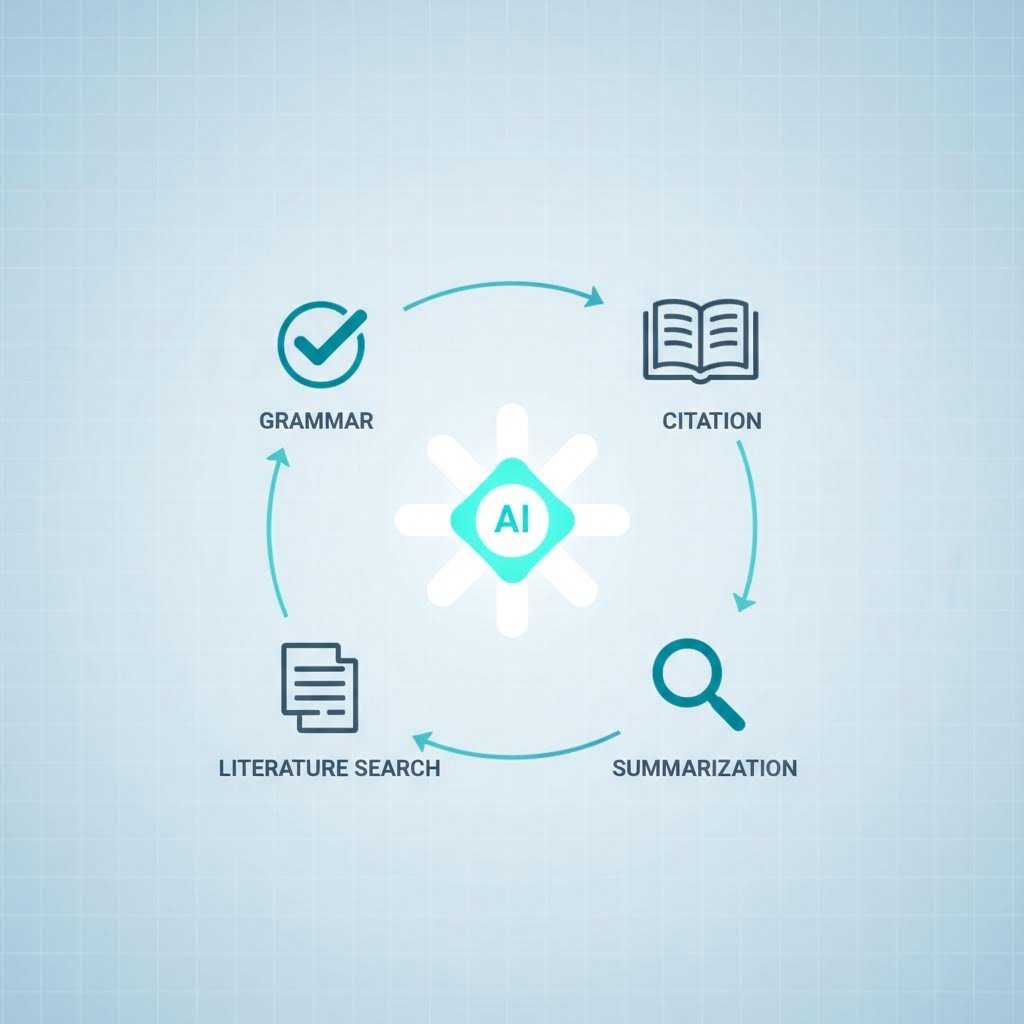
- Advanced Language and Grammar Editing: This goes beyond simple spell-checking. A top-tier tool should understand the context of academic writing, offering suggestions to improve clarity, conciseness, and formal tone. Features like those in Paperpal are trained on millions of published papers to provide edits that align with scholarly conventions.
- Citation and Reference Management: A major bottleneck in research writing is managing citations. Tools like Jenni.ai excel at this by helping you find and cite sources from vast databases in thousands of different styles (e.g., APA, MLA). This feature is critical for avoiding plagiarism and ensuring scholarly accuracy.
- Literature Discovery and Summarization: Modern AI tools can accelerate your literature review. Platforms such as SciSpace allow you to chat with research papers, ask questions, and get simplified explanations of complex topics. This helps you quickly assess the relevance of an article without having to read it in its entirety.
- Paraphrasing and Plagiarism Avoidance: To help you integrate sources while maintaining your own voice, many tools offer sophisticated paraphrasing capabilities. A good paraphraser, like QuillBot's, helps you rephrase sentences to improve flow and avoid accidental plagiarism. However, it's crucial to use this feature to support your understanding, not to simply copy ideas.
- Submission Readiness Checks: Some of the most advanced platforms offer checks that go beyond language. They analyze your manuscript for common reasons for desk rejection, such as missing sections, incorrect formatting, or ethical statement omissions, ensuring it meets journal standards before you submit.
A Detailed Comparison of the Best AI Tools
Selecting the right AI assistant depends heavily on your specific needs, from drafting and editing to literature management. The market offers a range of tools, each with unique strengths. This section provides a detailed breakdown of the leading platforms to help you make an informed decision.
| Tool | Core Function | Citation Support | Free Version | Best For |
|---|---|---|---|---|
| Paperpal | Academic writing & editing | Yes, with extensive style support | Yes (limited) | Researchers preparing manuscripts for journal submission. |
| Jenni.ai | AI writing assistant & research | Yes, with PDF integration | Yes (limited) | Students and academics needing help with drafting and citation. |
| SciSpace | Literature discovery & comprehension | Yes, from a database of 280M+ papers | Yes (limited) | Researchers conducting in-depth literature reviews. |
| Grammarly | Grammar, tone & clarity suggestions | Yes (basic) | Yes (robust) | General academic writing and polishing prose for clarity. |
| QuillBot | Paraphrasing & summarization | Yes (basic) | Yes (with character limits) | Students looking to rephrase text and avoid plagiarism. |
Paperpal
Paperpal is an AI tool built specifically for academic and scientific writing. Its biggest strength lies in its deep understanding of scholarly language, providing real-time suggestions to enhance grammar, clarity, and manuscript structure. It offers over 30 submission checks to help researchers avoid common reasons for desk rejection. It also includes features for paraphrasing, translation, and citation. Paperpal is best for PhD candidates and professional researchers who are focused on preparing high-quality manuscripts for publication in reputable journals.
Jenni.ai
Jenni.ai positions itself as an intelligent research assistant designed to overcome writer's block. Its AI Autocomplete feature writes alongside you, suggesting text and citations as you type. It excels at integrating with your research library, allowing you to upload PDFs and generate text based on your sources. With support for thousands of citation styles and the ability to build outlines, Jenni.ai is ideal for students and early-career researchers who need support throughout the entire drafting process, from initial idea to final reference list.
SciSpace
SciSpace (formerly Typeset) is a powerful tool for navigating and understanding scientific literature. Its standout feature is the AI-powered copilot that allows you to ask questions about research papers, get simplified explanations, and extract key data. While it also offers an AI writer that helps with text completion and citation, its primary value is in making the literature review process faster and more efficient. SciSpace is perfect for researchers at the beginning of a project who need to quickly get up to speed on a new topic.
Making Your Choice: Free vs. Paid AI Tools
One of the most practical considerations when choosing an AI writing tool is the cost. Most platforms operate on a freemium model, offering a free version with basic features and a paid subscription that unlocks more advanced capabilities. Understanding the trade-offs between these tiers is key to selecting a tool that fits both your needs and your budget.
Free tools can be incredibly useful, especially for undergraduate students or those with occasional writing needs. They typically provide essential grammar checks, limited paraphrasing, and basic summarization. For many, this is sufficient for polishing essays or short assignments. However, free versions often come with limitations, such as a cap on the number of words you can process, restricted access to advanced suggestions, or the absence of in-depth plagiarism checks.
Paid subscriptions, on the other hand, are geared toward serious researchers, graduate students, and academics. The investment often unlocks critical features that are indispensable for writing a thesis or journal article. These premium benefits frequently include unlimited usage, advanced checks for academic tone and style, comprehensive plagiarism detection against academic databases, and robust citation management features. For those whose careers depend on publication, a paid tool is often a worthwhile investment in efficiency and quality.
Here are some final recommendations based on user type:
- For Undergraduate Students: A free tool like the basic version of Grammarly or QuillBot is often sufficient for improving the clarity and grammar of essays and assignments.
- For Graduate Students and PhD Candidates: A tool with strong drafting and citation capabilities like Jenni.ai can save countless hours. As you approach submission, a specialized editor like Paperpal becomes invaluable for manuscript preparation.
- For Professional Researchers and Academics: An all-in-one solution or a combination of tools is often best. SciSpace is excellent for literature review, while Paperpal is the top choice for ensuring a manuscript meets the rigorous standards of peer-reviewed journals.

Frequently Asked Questions
1. Can AI write a whole research paper for free?
While some AI tools can generate full documents, relying on them to write an entire research paper is not recommended. Doing so raises serious ethical issues, violates academic integrity policies, and often results in content that lacks the critical analysis and original thought required for scholarly work. The best use of AI is as an assistant to help you write and refine your own ideas.
2. Can ChatGPT write a research paper?
ChatGPT can be a useful tool for brainstorming ideas, summarizing articles, and improving the language of your writing. However, it should not be used to generate fabricated data or write entire sections of a paper from scratch. Its knowledge is broad but not always specialized or up-to-date, and it cannot replace the rigorous process of original research and critical thinking.
3. Which AI is better than ChatGPT for essay writing?
For academic writing, specialized tools are generally better than general-purpose models like ChatGPT. Platforms like Paperpal, Jenni.ai, and SciSpace are designed with the specific needs of researchers in mind. They offer features like accurate citation management, integration with academic databases, and language suggestions tailored to a scholarly tone, which provides a significant advantage over more generic AI writers.