

TL;DR
International SEO is the process of optimizing your website to rank in search engines for different countries and languages. Executing it successfully requires a strategic approach that goes far beyond simple translation. The best practices involve conducting thorough market research to validate opportunities, establishing a sound technical foundation with the right URL structure and hreflang tags, and deeply localizing content to resonate with cultural nuances. A successful strategy ensures that the right version of your site reaches the right audience, improving user experience and driving global growth.
Phase 1: Foundational Strategy and Market Research
Before diving into technical changes or content translation, a successful international SEO campaign begins with a solid strategy and meticulous market research. This foundational phase is critical for avoiding costly mistakes and ensuring your efforts are directed toward markets with genuine potential. The goal is to make data-driven decisions, not assumptions, about where to expand your digital footprint.
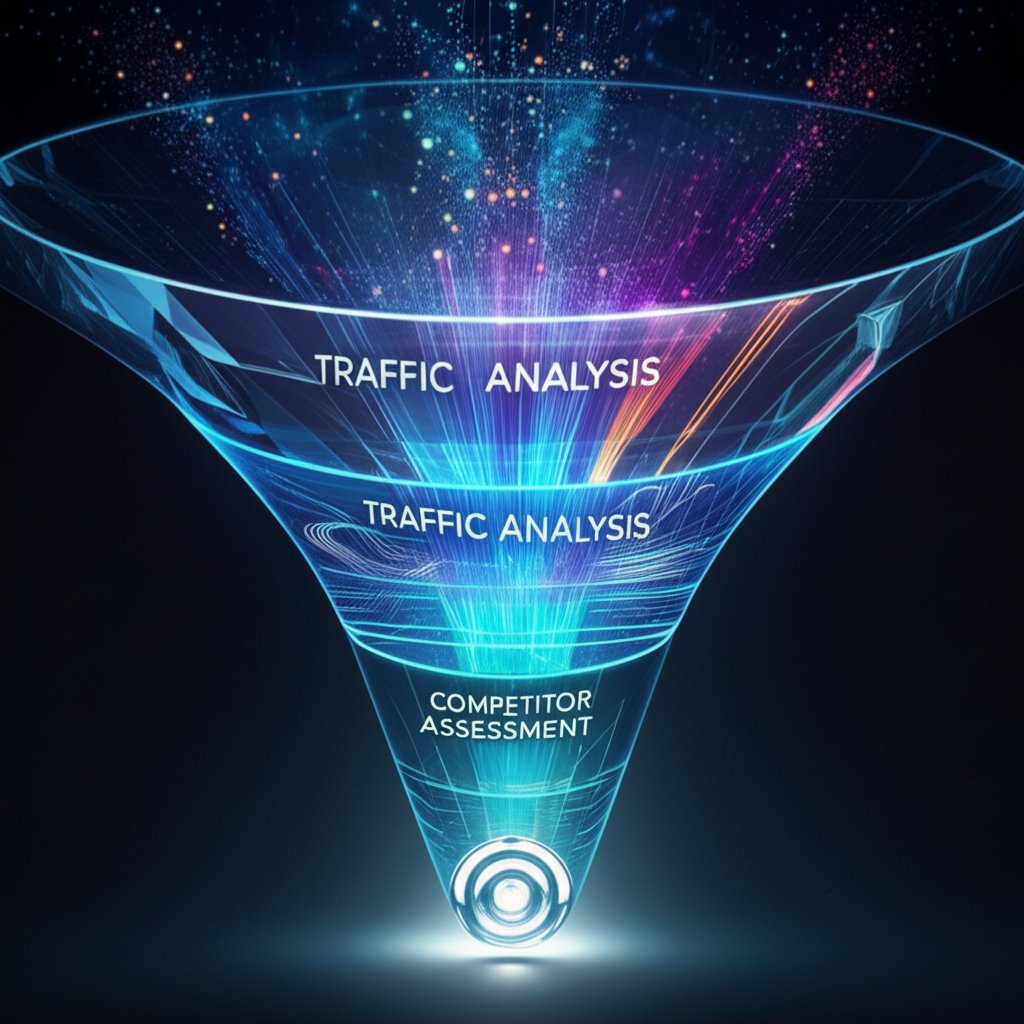
The first step is to analyze your existing website traffic to identify organic international interest. Using tools like Google Analytics, you can pinpoint which countries are already sending visitors your way. Significant traffic from a specific country is a strong indicator of existing demand. For example, a US-based company might discover a surprising amount of traffic from Brazil, signaling a potential market to explore further. This initial analysis helps you move from a broad global ambition to a focused list of viable target countries.
Once you have potential markets in mind, the next step is to assess their viability and the competitive landscape. As detailed in guides from Semrush, tools like market explorers can reveal the market size, audience demographics, and key competitors in a specific region. Analyzing top competitors in Germany, for instance, will show you who you're up against and what strategies are already working there. This research helps you understand local search behavior and confirm that you can handle operational realities like international shipping, local regulations, and cultural buying habits.
With this research complete, you can formulate a clear plan. This involves setting specific, measurable goals—such as increasing organic traffic from Spain by 30% or generating 50 new leads per month from the UK. A strategic approach prevents you from spreading your resources too thin and allows you to focus on winning one market at a time before expanding further.
Strategic Market Research Checklist:
- Analyze Existing Traffic: Use analytics to identify countries already driving traffic and conversions.
- Assess Market Viability: Research market size, demand, and profitability for potential new regions.
- Conduct Competitor Analysis: Identify key local competitors and analyze their SEO strategies, strengths, and weaknesses.
- Define Clear SEO Goals: Set specific, measurable objectives for traffic, leads, or sales for each target market.
- Perform Initial Keyword Research: Gauge search demand by researching how users in the target country search for your products or services.
Phase 2: Technical SEO and International URL Structure
With a clear strategy, the next step is to build the technical framework that allows search engines to understand and correctly serve your international content. This phase is centered on two core decisions: choosing an international URL structure and correctly implementing hreflang tags. These technical signals are essential for directing users and search engine crawlers to the right version of your website.
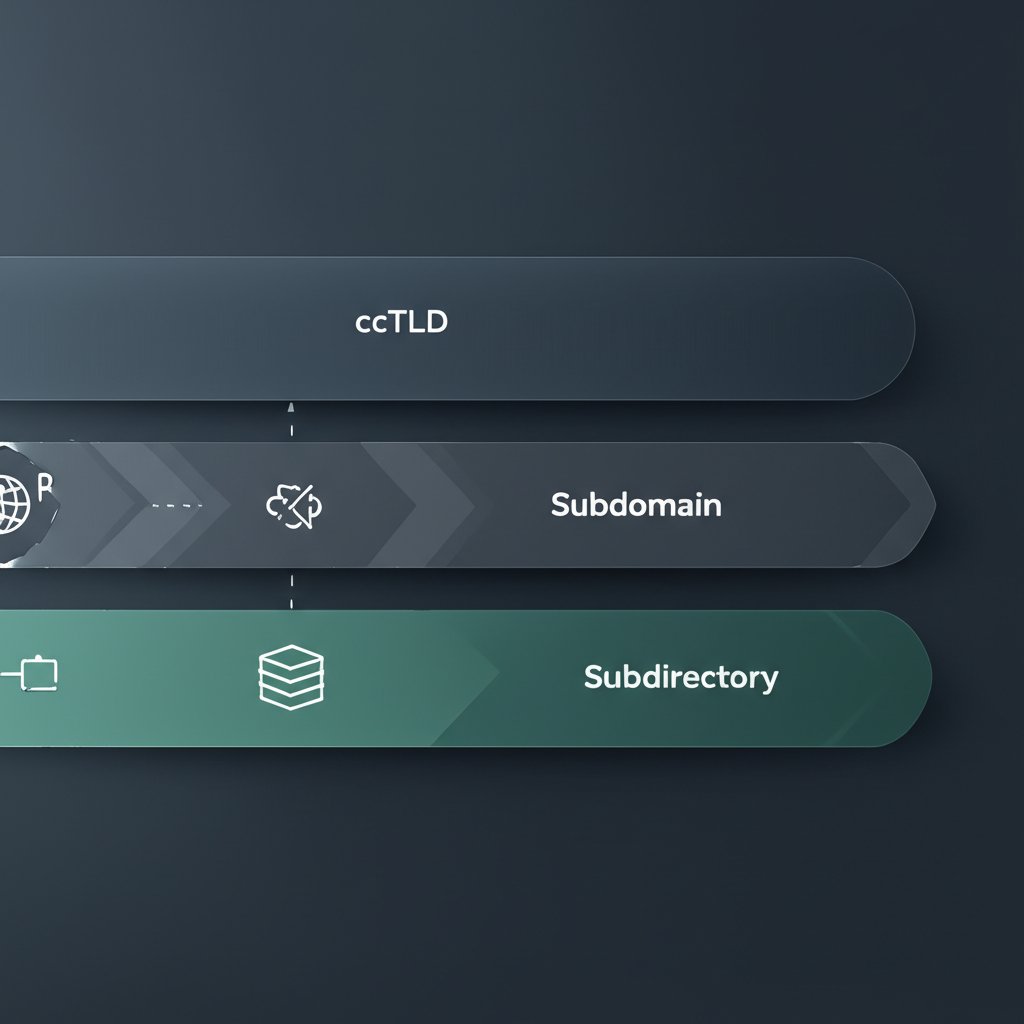
There are three primary URL structures to choose from, each with distinct advantages and disadvantages. Your choice will impact your site's management, cost, and SEO signaling power. A detailed breakdown from sources like Ahrefs and Moz helps clarify the options.
| URL Structure | Example | Pros | Cons |
|---|---|---|---|
| ccTLDs (Country-Code Top-Level Domains) | yourbrand.de | Strongest geotargeting signal for users and search engines; clear separation of sites. | Most expensive and resource-intensive; requires building SEO authority for each domain separately. |
| Subdomains | de.yourbrand.com | Easy to set up; allows for different server locations; clear separation. | Weaker geotargeting signal than ccTLDs; may dilute some domain authority initially. |
| Subdirectories (Subfolders) | yourbrand.com/de/ | Easiest and cheapest to implement; consolidates all SEO authority on a single domain. | Weakest geotargeting signal; a single server location may impact site speed for distant users. |
While ccTLDs offer the strongest country-specific signal, subdirectories are often recommended for businesses starting their international journey due to their simplicity and ability to consolidate link equity. Ultimately, the best choice depends on your resources and long-term goals.
Regardless of the URL structure you choose, implementing hreflang tags is non-negotiable. Hreflang is an HTML attribute that tells search engines which language and geographic region a specific page is targeting. This helps prevent duplicate content issues when you have similar pages (e.g., US English vs. UK English) and ensures that a user in France sees the French version of your page in their search results, not the Spanish one. As explained by experts at Backlinko, a correct implementation is crucial.
A proper hreflang implementation should be placed in the <head> section of your HTML, in your HTTP header, or within your XML sitemap. Each page should include a self-referencing hreflang tag plus tags for all other language/region variations. You should also include an `x-default` tag to specify a fallback page for users whose language or region you don't target.
Here is an example for a page targeting users in Germany, with an alternative for US English speakers:
<link rel="alternate" hreflang="de-DE" href="http://www.yourbrand.com/de/" />
<link rel="alternate" hreflang="en-US" href="http://www.yourbrand.com/us/" />
<link rel="alternate" hreflang="x-default" href="http://www.yourbrand.com/" />
Correctly configuring these technical elements provides a clear roadmap for search engines, ensuring your carefully crafted content reaches the intended international audience effectively.
Phase 3: Content Localization and Cultural Adaptation
Once your technical foundation is in place, the focus shifts to the most impactful element of international SEO: content localization. This goes far beyond simple machine translation. True localization means adapting your entire message—including text, visuals, and user experience—to align with the cultural norms, values, and expectations of each target market. It’s the difference between content that feels foreign and content that feels native, which is essential for building trust and driving conversions.
Direct translation often fails because it misses nuances, idioms, and cultural context. For example, a keyword that works in Spain may not be the preferred term in Mexico; Semrush highlights the difference between "gafas" (glasses in Spain) and "lentes" (glasses in Mexico). Similarly, humor, color symbolism, and imagery can have vastly different interpretations across cultures. A successful strategy requires adapting everything from on-page copy to the visuals you use. An excellent example from Backlinko shows how H&M features different models and styles on its homepages for the UK, Uruguay, and China to reflect local relevance.
To accelerate the workflow, some teams use advanced tools to create foundational content. For instance, to rapidly generate initial drafts for different markets, you can leverage an AI blog post generator like BlogSpark, which can produce SEO-optimized articles that serve as a strong starting point. However, this content must then be refined and adapted by native-speaking marketers to ensure it truly resonates with the local audience. This combination of technology and human expertise allows for both scale and quality.
Effective localization also involves adapting functional elements of your site. This includes displaying prices in the local currency, using appropriate date and time formats (e.g., DD/MM/YYYY vs. MM/DD/YYYY), providing local customer service numbers, and offering familiar payment methods. These details signal to users that you understand and cater to their specific needs, which significantly improves the user experience and builds credibility.
Content Localization Checklist:
- Work with Native Speakers: Involve native speakers in keyword research, content creation, and review to ensure cultural and linguistic accuracy.
- Adapt Messaging and Tone: Adjust your brand voice to align with local communication styles, whether formal or informal.
- Localize Visuals: Use images, colors, and examples that are culturally relevant and representative of the target audience.
- Adjust Functional Elements: Localize currency, dates, units of measure, and contact information.
- Highlight Local Social Proof: Feature reviews, testimonials, and case studies from customers within the target region to build trust.
Phase 4: Off-Page Authority and Performance Measurement
Launching your international site is just the beginning. To achieve and maintain visibility, you need to build authority in each target market and consistently measure your performance. Off-page SEO, particularly local link building, is a powerful signal to search engines that your content is relevant and trusted within a specific region. A backlink from a reputable German news site, for example, carries more weight for your German rankings than a link from a US-based site.
Building local links requires a targeted approach. As noted by SEO guides from Phrase, backlinks from domains with a local ccTLD (like `.de` for Germany or `.fr` for France) are especially valuable. Strategies for acquiring these links include reaching out to local media outlets, collaborating with regional influencers, guest blogging on relevant local websites, and getting listed in trusted local directories. This process establishes your site as an authoritative voice within that country's digital ecosystem.
Alongside building authority, you must meticulously track your performance to understand what's working and where adjustments are needed. Monitoring key metrics allows you to measure the ROI of your international SEO efforts and make informed decisions to optimize your strategy. It’s crucial to analyze performance on a per-country basis rather than looking at global aggregates, as this will reveal the unique challenges and opportunities in each market.
To do this effectively, use tools like Google Analytics 4 to segment your data by country. This will help you monitor key performance indicators (KPIs) such as organic traffic, conversion rates, bounce rates, and user engagement for each specific region. Additionally, tools like Semrush's Position Tracking allow you to monitor your keyword rankings in different countries, giving you a clear picture of your visibility in local SERPs. By regularly analyzing this data, you can refine your content, technical setup, and link-building efforts to continuously improve your global online presence.
Key Metrics for International SEO Performance:
- Organic Traffic by Country: The number of visitors from organic search, segmented by each target country.
- Keyword Rankings by Country: Your site's position in search results for target keywords in each specific region.
- Conversion Rate by Country: The percentage of visitors from each country who complete a desired action (e.g., purchase, form submission).
- Backlink Profile by Region: The quantity and quality of backlinks acquired from domains relevant to each target country.
- User Engagement Metrics: Metrics like bounce rate and time on site for each country, indicating content relevance and user experience.
Building Your Global SEO Engine
Successfully expanding your digital presence across borders is a formidable but achievable goal. It hinges on a methodical, multi-stage process that treats each new market with unique attention. The journey begins not with code, but with strategy—validating markets and understanding local audiences to ensure you're building on solid ground. This is followed by a precise technical implementation, where the right URL structures and hreflang tags create a clear, navigable path for both users and search engines.
However, technical accuracy alone is not enough. The heart of international SEO lies in deep content localization and cultural adaptation. By moving beyond literal translation to create content that genuinely speaks to local values, preferences, and behaviors, you build the trust necessary to convert visitors into customers. Finally, the entire effort must be supported by continuous measurement and authority-building through local off-page signals, allowing you to refine your approach and solidify your presence in each new region.
By integrating these four pillars—strategic research, technical precision, cultural adaptation, and performance measurement—you transform your website from a single-market entity into a powerful global engine. This holistic approach is the key to not just entering new markets, but truly succeeding in them.
Frequently Asked Questions
1. What is an example of international SEO?
A great example of international SEO is an American e-commerce company selling running shoes that decides to expand into the German market. First, they would conduct market research and discover strong demand. Technically, they might choose a subdirectory structure (e.g., `theirbrand.com/de/`). They would then implement hreflang tags, such as `<link rel="alternate" hreflang="de-DE" ...>`, to signal the German version to Google. The content, including product descriptions and blog posts, would be professionally translated and localized by a native German speaker, not just machine-translated. Prices would be displayed in Euros (€), shoe sizes would be listed in EU standards, and they would build backlinks from German fitness blogs and publications to establish local authority.
2. What is the 80/20 rule for SEO?
The 80/20 rule for SEO, also known as the Pareto Principle, is the concept that approximately 80% of your organic results (like traffic and conversions) come from about 20% of your SEO efforts. For example, a small number of your top-performing pages or a handful of high-impact backlinks might be responsible for the vast majority of your site's success. This principle helps strategists prioritize tasks by focusing on the high-impact activities that drive the most significant results, rather than getting bogged down in low-impact optimizations.


