

TL;DR
While meta descriptions are not a direct ranking factor in Google's algorithm, they are critically important for SEO. Their primary role is to act as persuasive 'ad copy' on the search engine results page (SERP), significantly influencing a user's decision to click on your link. A well-crafted meta description can dramatically improve your click-through rate (CTR), a key user engagement signal that Google does pay attention to.
The Direct vs. Indirect Role of Meta Descriptions in SEO
It's crucial to understand the distinction between direct and indirect ranking factors when evaluating the importance of meta descriptions. A direct factor is a signal that Google's algorithm explicitly uses to rank pages, like a title tag or high-quality content. An indirect factor influences user behavior, which in turn sends positive signals to Google. The meta description falls squarely into this second category.
Google has been clear on this point. According to its official documentation, Google Search Central states they do not use the meta description tag in their ranking calculations. This has led some to mistakenly believe they are irrelevant. However, this official stance only tells part of the story. The reason Google moved away from using them as a direct signal was due to historical abuse, such as keyword stuffing, which made them an unreliable indicator of page quality.
Despite not being a direct signal, their value is immense. Think of the SERP as a digital storefront. The title tag is the name of your store, but the meta description is the compelling window display that convinces a user to come inside. It provides a summary of the page's content and sets the user's expectations. As noted by SEO experts at Bruce Clay, a relevant, well-written meta description can significantly increase the likelihood of attracting clicks from users.
In contrast to the title tag, which has a direct impact on rankings, the meta description's power is persuasive. Its job is to improve CTR. A higher CTR tells Google that users find your result more relevant and appealing than others for a given query. Over time, these positive user engagement signals can contribute to better rankings, making the meta description a powerful, albeit indirect, tool in your SEO arsenal.
Mastering the SERP Pitch: How Meta Descriptions Drive Click-Through Rate (CTR)
The primary function of a meta description is to 'sell the click.' When a user sees a list of ten blue links, your description is your one chance to stand out and communicate value. It acts as a short, persuasive advertisement for your page, directly impacting your click-through rate. A higher CTR is a strong signal to Google that your page is a good match for the user's query, which can indirectly support your rankings.
A compelling description sets clear expectations and differentiates your result from the competition. According to Yoast, an authority in SEO, using an active voice and making your description actionable are key to success. It should address the user directly and clearly state the benefit they will receive by clicking your link. For example, instead of a passive description, an active one prompts engagement.
To illustrate the difference, consider the following examples:
| Good Meta Description (Actionable & Clear) | Bad Meta Description (Vague & Stuffed) |
|---|---|
| Discover 10 easy and healthy dinner recipes that you can make in under 30 minutes. Get simple, step-by-step instructions for delicious weeknight meals. | Healthy dinner recipes, easy recipes, dinner food, quick meals. This page has recipes for dinner. Find healthy and easy recipes here. |
| Learn how to create a sound site structure for better SEO and user experience. Our complete guide walks you through every step, from planning to implementation. | Site structure is important for websites. This is a guide about site structure and SEO. Read more about site structure. |
To write descriptions that drive clicks, focus on these persuasive techniques:
- Use an Active Voice: Start with action verbs like 'Learn,' 'Discover,' 'Find,' or 'Get.' This encourages the user to take the next step.
- Address the User Directly: Use 'you' and 'your' to create a connection and make the description feel personal.
- Include a Call-to-Action (CTA): A gentle nudge like 'Find out more,' 'Try for free,' or 'Shop now' can significantly boost clicks.
- Highlight Value: What makes your page the best answer? Mention key benefits, unique selling points, or specific data to entice the user.

Best Practices for Crafting Compelling Meta Descriptions
Writing an effective meta description is a blend of art and science. Following established best practices ensures your message is clear, compelling, and has the best chance of being displayed as you intended. A common question is what happens if a meta description is missing entirely. In that case, Google will generate a snippet from your page's content, which means you lose a critical opportunity to control your messaging and present a compelling pitch to users.
Here are the key elements to focus on for every meta description you write:
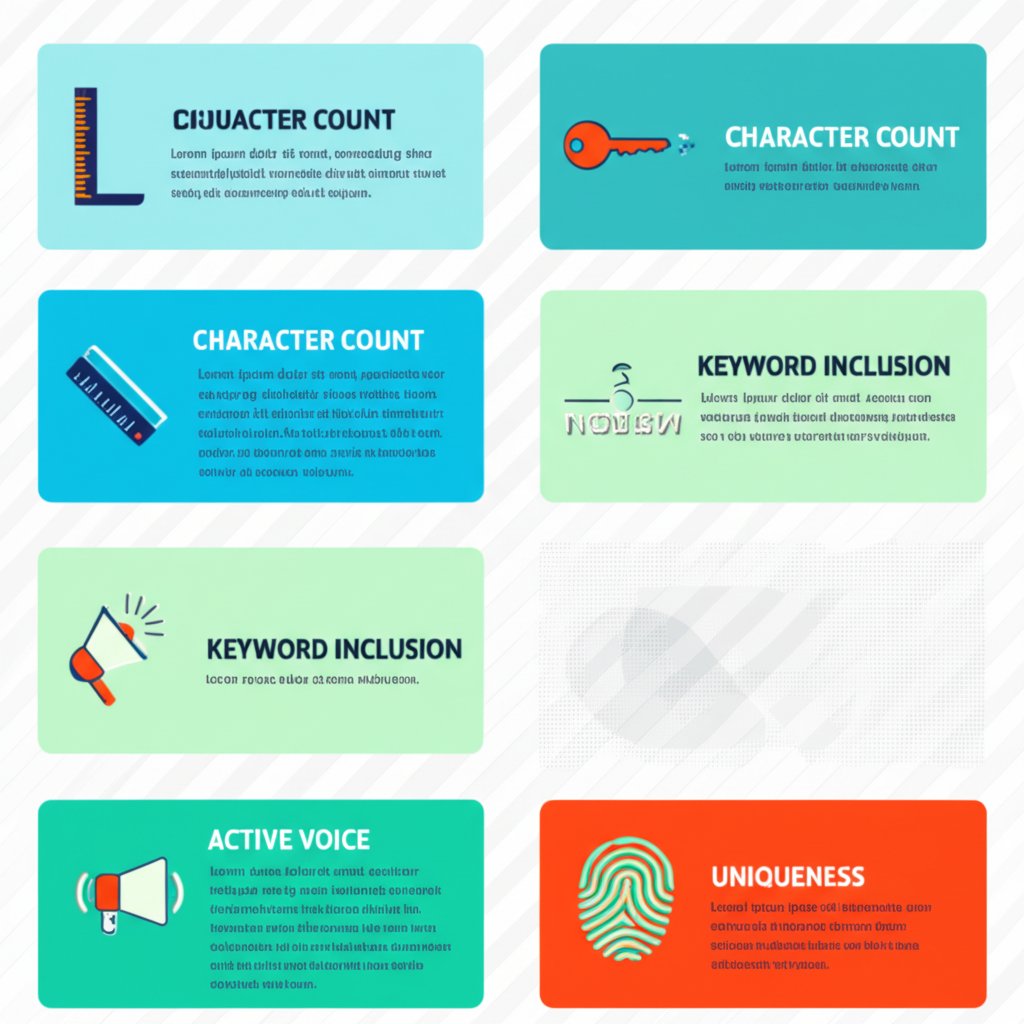
- Maintain Optimal Length: While Google has no official limit, snippets are often truncated. To ensure your full message is seen, aim for a length of around 155 characters. As Semrush notes, the average displayed length is often shorter on mobile devices.
- Include the Focus Keyword: When a user's search query matches text in your meta description, Google often bolds it. This makes your result stand out and visually confirms its relevance to the searcher. Place your primary keyword naturally within the description.
- Write in an Active, Actionable Voice: Use strong verbs and speak directly to the user. Frame the description as a solution to their problem or an answer to their question. Phrases like “Learn how to...” or “Get the facts on...” are more engaging than passive descriptions.
- Ensure It Matches Page Content: Your meta description is a promise. If you trick users into clicking with a misleading description, they will likely leave your page immediately. This high bounce rate is a negative signal to search engines. The description must accurately reflect the content of the page.
- Make Every Description Unique: Duplicate meta descriptions across different pages can confuse both users and search engines. Each page should have a unique description that summarizes its specific content. If you're struggling to scale this effort, marketers and creators can revolutionize their workflow with tools like BlogSpark, an AI blog post generator that can help craft optimized content, including meta descriptions, in seconds.
Why Google Rewrites Meta Descriptions (And How to Adapt)
One of the most common frustrations for SEO professionals is crafting the perfect meta description, only to find that Google has ignored it and displayed a different snippet in the search results. Studies have shown this is a frequent occurrence, with Google rewriting descriptions more often than not. However, this is not a penalty or a sign of failure; it's a strategic decision by Google to provide the most relevant possible snippet for each unique search query.
Google's primary goal is to satisfy user intent. It rewrites meta descriptions for several key reasons:
- Query Mismatch: The provided description may not align well with the specific keywords the user searched for. Google will pull a snippet of text from the page's body that contains those keywords to show a more relevant result.
- Long-Tail Searches: For very specific, long-tail queries, your pre-written description is unlikely to contain the exact phrase. Google will find that phrase on your page and generate a custom snippet around it.
- Lack of Descriptiveness: If your meta description is too generic, vague, or stuffed with keywords, Google may deem it unhelpful and create its own version that better summarizes the page's content.
Instead of viewing this as a problem, see it as a signal. Google's rewrites reinforce the importance of having high-quality, well-structured content throughout your entire page, as any part of it could be used as a SERP snippet. To adapt, focus on increasing the chances that Google will use your intended description. Ensure it closely matches the page's H1 tag and primary keywords. For advanced control, Google allows the use of a `data-nosnippet` HTML attribute to prevent specific parts of a page from being shown in the snippet, as detailed in their developer documentation.
Frequently Asked Questions
1. Is meta description still important for SEO?
Yes, the meta description is still very important for SEO, but not as a direct ranking factor. Its primary importance lies in its ability to increase the click-through rate (CTR) from search results. A compelling meta description acts like an advertisement for your page, encouraging users to click your link over a competitor's, which sends positive user engagement signals to Google.
2. What happens if the meta description is missing in SEO?
If a meta description is missing, Google will automatically generate a snippet for your page from its content. While this is better than nothing, it represents a missed opportunity. You lose the ability to control the messaging and craft a compelling, optimized summary designed to attract clicks. A Google-generated snippet may not be as persuasive or relevant as one you write yourself.


