

TL;DR
TF-IDF (Term Frequency-Inverse Document Frequency) is a numerical statistic that measures a word's importance to a document within a collection. It works by balancing how often a term appears on a page (Term Frequency) against how rare that term is across a larger set of documents (Inverse Document Frequency). While it's a foundational concept in information retrieval, modern TF-IDF in SEO is not about optimizing for a specific score but using the analysis to inform content strategy, identify topical gaps, and understand competitor language.
Deconstructing TF-IDF: What Do 'Term Frequency' and 'Inverse Document Frequency' Actually Mean?
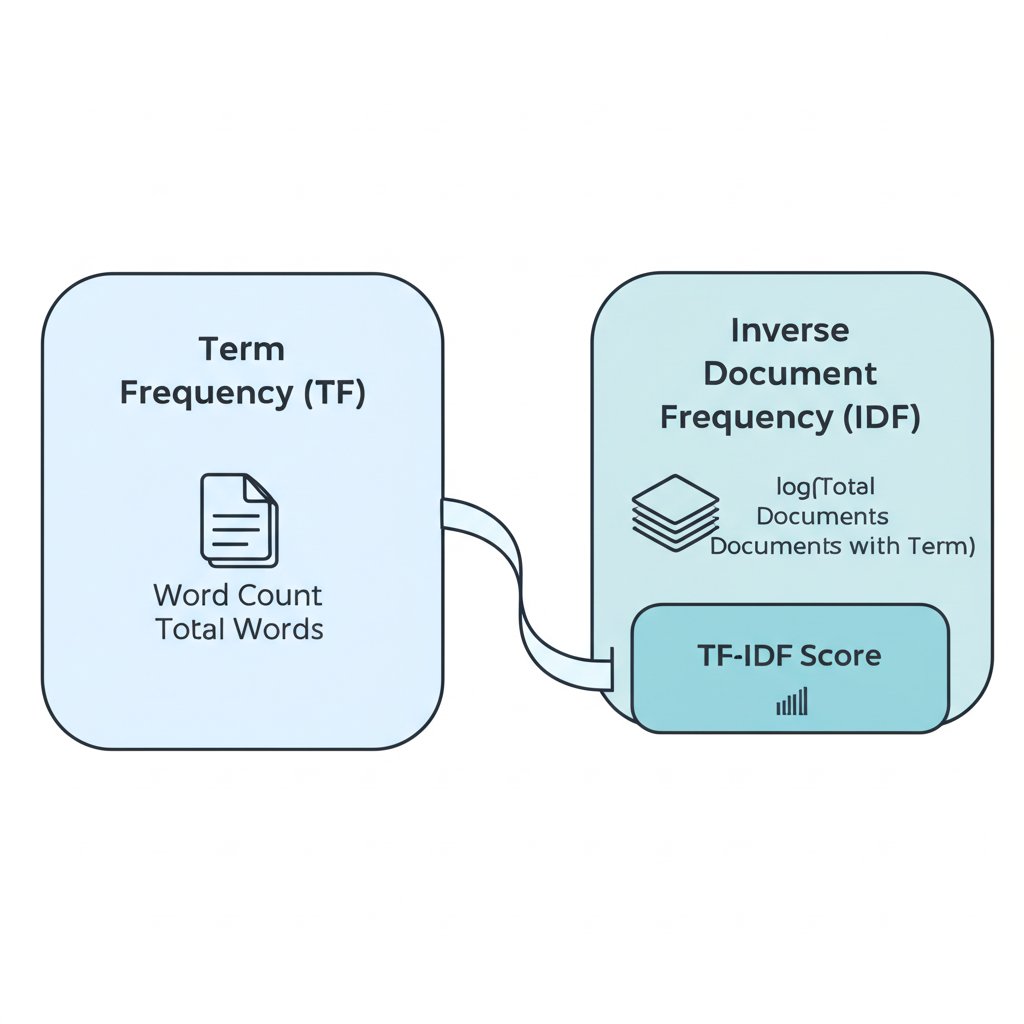
At its core, TF-IDF is a clever way to find the words that truly define a document. It moves beyond simply counting words to assign a weight that reflects genuine thematic relevance. The final TF-IDF score is the product of two distinct metrics: Term Frequency (TF) and Inverse Document Frequency (IDF). Understanding each component is key to grasping why this concept has been so influential in search and information retrieval.
Term Frequency (TF) is the more straightforward part of the equation. It measures how often a specific word appears in a single document. The calculation is simple: the number of times a term occurs is divided by the total number of words in the document. For example, if the word "solar" appears 10 times in a 1,000-word article about renewable energy, its TF is 0.01 (10/1000). The basic assumption is that words mentioned more frequently are more important to the document's topic.
However, relying on Term Frequency alone is flawed. Common words like "the," "and," or "is" would have very high frequencies but offer no real insight into the document's specific subject. This is where Inverse Document Frequency (IDF) comes in to provide crucial context. IDF measures how unique or rare a word is across a large collection of documents (a corpus). As noted by sources like Semrush, it counterbalances the weight of frequently used words. The formula calculates the logarithm of the total number of documents divided by the number of documents containing the term. Words that appear in many documents, like "and," will have a very low IDF score, while a more specific term like "photovoltaic" will have a high IDF score, marking it as a significant and descriptive term.
The magic happens when you multiply these two values: TF-IDF = TF * IDF. This calculation produces a score that highlights words that are frequent in a specific document but rare across the broader collection. A high TF-IDF score indicates a term is a strong signal of the document's topic. For instance, in an article about dog training, the word "clicker" might have a high TF-IDF score because it appears often in that article (high TF) but is relatively uncommon across a general collection of web documents (high IDF).
The Great Debate: Is TF-IDF a Direct Google Ranking Factor in Modern SEO?
One of the most persistent questions in SEO circles is whether TF-IDF is a direct ranking factor that Google's algorithm actively uses to score and rank pages. The modern consensus, supported by industry experts and even Google's own representatives, is clear: TF-IDF is not a direct, optimizable ranking factor in today's sophisticated search landscape. While it was a foundational concept in information retrieval, thinking of it as a lever to pull for better rankings is an outdated approach.
The evidence against it being a primary factor is compelling. In an article from Search Engine Journal, it's highlighted that Google's John Mueller has referred to TF-IDF as a "fairly old metric" and emphasized that search technology has evolved significantly. Modern search engines have moved far beyond simple word-counting statistics. Trying to "optimize" for a specific TF-IDF score often leads to unnatural writing and keyword stuffing—a practice that Google actively penalizes. The goal of modern SEO is not to hit a certain keyword density, but to create high-quality, comprehensive content that satisfies user intent.
Today's search algorithms rely on far more advanced Natural Language Processing (NLP) techniques. Concepts like word vectors, semantic analysis, and transformer models (like BERT) allow Google to understand the context, nuance, and relationships between words and concepts. These systems don't just count keywords; they understand the meaning behind the query and the content. As Ahrefs points out, using TF-IDF alone would be too simplistic and easily manipulated in an index as vast as Google's. It was a crucial first step in identifying relevant documents, but it can't distinguish between high-quality, authoritative content and a shallow article that simply repeats terms.
Therefore, the verdict is that TF-IDF should be viewed as a foundational concept, not a tactical checklist item. It helps us understand the *principles* of topical relevance—that specific, descriptive language is important. However, the focus for SEO professionals should be on the outcome TF-IDF was designed to achieve: demonstrating topical authority through comprehensive and naturally worded content. Chasing a specific TF-IDF score is a futile exercise; creating content that thoroughly covers a topic for a human reader is what aligns with modern search engine goals.
Practical TF-IDF Analysis: A Modern Workflow for Content Strategy
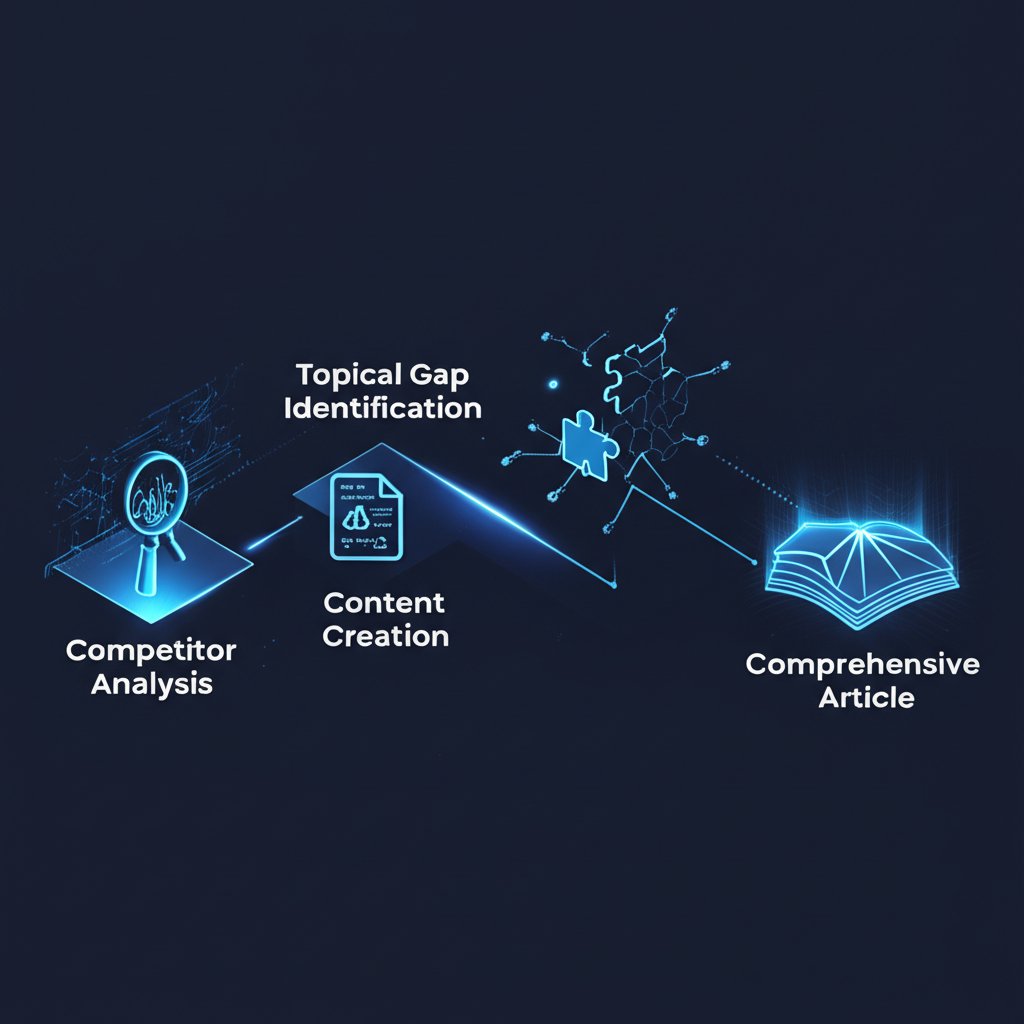
While TF-IDF is not a direct ranking factor to optimize for, its principles are incredibly valuable for informing a sophisticated content strategy. The modern application of TF-IDF is not about hitting a target score but about using it as an analytical tool for competitive research and topical gap analysis. This approach helps you understand the language and concepts that top-ranking pages use, enabling you to create more comprehensive and relevant content. A practical workflow, inspired by guides like the one from iPullRank, can transform this old concept into a powerful strategic asset.
Here is a step-by-step process for leveraging TF-IDF analysis in your content workflow:
- Define Your Target Keyword and Content Goal: Start with a clear primary keyword for your page. Understand the search intent behind it. Are users looking for a definition, a comparison, a how-to guide? Your goal is to create content that best serves this intent.
- Analyze Top-Ranking Competitor Pages: Use a TF-IDF tool to analyze the top 10-20 pages that already rank for your target keyword. These tools scrape the competitor content and run a TF-IDF calculation to identify the most important single words and multi-word phrases present in their articles.
- Identify Semantically Related Terms: The output of the tool will be a list of terms with high TF-IDF scores. This is your goldmine. Look for the non-obvious, semantically related terms and concepts that your competitors are covering. These are the subtopics and entities that search engines associate with your main topic.
- Spot Content and Topical Gaps: Compare the list of important terms from your competitors' content against your own draft or existing page. Where are the gaps? Are your competitors discussing specific examples, benefits, or related concepts that you've missed? This analysis provides a data-driven roadmap for making your content more comprehensive.
- Build a More Comprehensive Content Brief: Use these insights to enhance your content outline or brief. Instead of just guessing what to include, you now have a list of crucial topics and sub-topics to cover. This ensures your final piece is not just well-written but also topically complete, satisfying both user and search engine expectations. For marketers looking to scale this process, AI-powered platforms can be a major asset. While TF-IDF tools provide the analytical blueprint, AI blog generators like BlogSpark can help execute on these insights, transforming a detailed brief into an engaging, SEO-optimized draft in seconds. As detailed by BlogSpark, these tools streamline the workflow from keyword discovery to final publication.
By following this workflow, you shift the focus from chasing a meaningless score to a strategic process of content improvement. TF-IDF analysis becomes a diagnostic tool that helps you create objectively better, more thorough, and more authoritative content than your competition.
Beyond TF-IDF: Understanding Content Relevance in the Age of AI
TF-IDF was a revolutionary concept for its time, but it has significant limitations in the context of modern search. Its primary drawback, as noted by sources like Alli AI, is that it operates on a purely statistical level. It can identify important words but has no genuine understanding of language. TF-IDF cannot grasp context, recognize synonyms (it would treat "car" and "automobile" as completely different terms), or comprehend the intent behind a search query. It's like counting the bricks in a building without understanding the architecture.
The evolution of search has been a journey toward overcoming these limitations. Today's search engines, powered by artificial intelligence and machine learning, have moved far beyond simple keyword matching. They employ sophisticated technologies like semantic search and word embeddings. These systems represent words and phrases as vectors in a multi-dimensional space, where the distance and direction between vectors correspond to their semantic relationship. This allows a search engine to understand that "how to fix a leaky faucet" and "dripping tap repair guide" are asking the same thing, even if the keywords are different.
This brings us to the advanced models used in tools like ChatGPT. When asked if ChatGPT uses TF-IDF, the answer is a definitive no. Modern Large Language Models (LLMs) are built on transformer architectures, which are light-years ahead of TF-IDF. These models process language by considering the relationships between all words in a sequence, allowing them to grasp context, subtlety, and complex ideas. The analogy holds: TF-IDF counts the words, while modern NLP understands the story.
For content creators and SEOs, the takeaway is clear. While understanding TF-IDF provides historical context, the path to success lies in aligning with how modern, AI-driven search engines work. The focus should be on creating expert-level content that covers a topic comprehensively and authoritatively. Instead of optimizing for keywords, optimize for topics. Answer related questions, provide clear explanations, use natural language, and structure your content logically. By doing so, you naturally provide the rich semantic signals that advanced algorithms are designed to reward, rendering obsolete techniques like chasing TF-IDF scores obsolete.
Frequently Asked Questions About TF-IDF in SEO
1. What is TF and IDF in SEO?
In the context of SEO, TF (Term Frequency) refers to how often a keyword appears on a page, calculated relative to the total word count. IDF (Inverse Document Frequency) measures how rare or common that keyword is across a large collection of documents, like the web. Multiplying them gives a TF-IDF score that helps gauge a word's topical importance to that specific page.
2. Does Google use TF-IDF?
Google does not use TF-IDF as a direct ranking factor in its modern algorithms. While the concept was foundational to information retrieval, Google now uses much more sophisticated Natural Language Processing (NLP) systems that understand context, synonyms, and user intent. The principles behind TF-IDF—that specific, relevant terms are important—are still valid, but there is no specific score to optimize for.
3. Does ChatGPT use TF-IDF?
No, ChatGPT and other advanced Large Language Models (LLMs) do not use TF-IDF. They are built on transformer architectures, which are far more advanced. These models learn the patterns, context, and relationships between words in vast datasets, allowing them to understand and generate human-like text with a deep grasp of meaning, something TF-IDF's statistical word-counting approach cannot do.


