

TL;DR
AI writing excels at producing structured, consistent, and data-driven text quickly, but often lacks emotional depth and originality. In contrast, human writing thrives on creativity, nuance, and personal connection, resulting in more engaging and persuasive content. The key difference lies in predictability; AI follows patterns, while humans introduce stylistic variety and unexpectedness, which can be identified through specific examples and analysis.
Key Characteristics: How AI and Human Writing Differ
Understanding the distinction between AI-generated and human-written content begins with recognizing their fundamental characteristics. While AI models are trained on vast datasets to mimic human language, they leave behind statistical fingerprints. Two technical concepts, as detailed in a technical analysis on HackerNoon, are crucial for this understanding: Perplexity and Burstiness. Perplexity measures how predictable the text is; AI writing tends to have low perplexity because it chooses the most statistically likely words. Human writing is more unpredictable, with higher perplexity. Burstiness refers to the variation in sentence length and structure. Humans naturally write with a mix of long, complex sentences and short, punchy ones (high burstiness), while AI often produces text with a more uniform sentence structure (low burstiness).
Beyond these technical markers, the differences become even more apparent in the purpose and emotional resonance of the writing. Human writing is driven by intent—to persuade, to connect, to entertain. It uses specific details, personal anecdotes, and rhetorical devices to build a relationship with the reader. As one analysis of political speeches points out, a human writer uses language to evoke emotion and demonstrate shared understanding, for instance, by naming specific local beaches to connect with a local audience. AI, lacking genuine experiences and emotions, struggles to replicate this. Its content can feel abstract, generic, and detached from the human experience, even when grammatically perfect.
To summarize these distinctions, consider the following comparison:
| Characteristic | AI Writing | Human Writing |
|---|---|---|
| Structure & Style | Uniform sentence length (low burstiness), predictable word choice (low perplexity), often formal or academic tone. | Varied sentence length and structure (high burstiness), uses unique phrasing and metaphors (high perplexity). |
| Emotional Depth | Lacks genuine emotion; may use emotional words without authentic context. | Conveys authentic emotion through storytelling, empathy, and personal experience. |
| Originality | Synthesizes existing information; struggles with truly novel ideas or perspectives. | Generates original ideas, offers fresh insights, and draws from unique personal experiences. |
| Consistency | Highly consistent in tone, style, and grammar. Can produce large volumes of content without fatigue. | Can be inconsistent; quality and tone may vary depending on the writer, topic, and even time of day. |
| Use of Anecdotes | Rarely uses personal stories or specific, relatable examples unless explicitly prompted. | Frequently uses anecdotes, real-life examples, and case studies to illustrate points and build rapport. |
Side-by-Side Examples Analyzed
Theoretical differences are one thing, but seeing AI and human writing side-by-side makes the distinctions tangible. Let's analyze two examples of a product description for a high-end, artisanal coffee.
Example 1: The AI-Generated Version
"Our premium coffee beans are sourced from high-altitude farms. This product features a balanced flavor profile with notes of chocolate and citrus. The beans are roasted to perfection to ensure optimal quality and a superior coffee experience. It is suitable for various brewing methods, including espresso and pour-over. Enjoy a delicious cup of coffee every morning with our expertly crafted blend."
Analysis: This text is a classic example of low perplexity and low burstiness. The sentences are of similar length and structure, creating a monotonous rhythm. Phrases like "sourced from," "flavor profile," and "superior coffee experience" are common, predictable marketing terms. The description is factually accurate but lacks personality and sensory detail. It informs, but it doesn't entice or connect.
Example 2: The Human-Written Version
"Morning fog clings to the volcanic slopes where our coffee is born. With each sip, you'll taste the struggle and the sun—a surprising burst of bright citrus that melts into a deep, lingering note of dark chocolate. We roast these beans in small batches, listening for the 'first crack' that tells us they're ready. This isn't just coffee. It's a ritual, a moment of quiet rebellion before the day begins."
Analysis: The human version immediately stands out for its high burstiness—the short, impactful final sentences contrast with the longer, more descriptive opening. It uses vivid, sensory language ("morning fog clings," "burst of bright citrus") and metaphor ("a moment of quiet rebellion") to create an emotional connection. The writing has a clear purpose: to sell not just a product, but an experience. It tells a story, making the coffee feel special and unique rather than a generic commodity.
How to Reliably Spot AI-Generated Content
Despite the clear differences in our examples, identifying AI content in the wild is surprisingly difficult. Research from Stanford University found that people can only distinguish AI-generated text from human writing with about 50% accuracy—essentially a coin flip. This is because we often rely on flawed assumptions, such as thinking perfect grammar indicates a human writer. However, you can improve your detection skills by looking for specific patterns.
A manual analysis is your first line of defense. Here are key things to look for:
- Check for Emotional Flatness: Does the text describe emotional situations without conveying genuine feeling? AI often uses emotional vocabulary without the subtle context that makes it believable.
- Analyze Sentence Variation: Read the content aloud. If it has a monotonous, robotic rhythm with little variation in sentence length or structure, it may be AI-generated.
- Look for Repetitive Phrasing: AI models sometimes overuse certain transition words or repeat the same sentence structure throughout a piece.
- Fact-Check for 'Hallucinations': AI can confidently state incorrect information or invent sources. If a claim seems surprising, verify it with a quick search.
- Notice the Lack of Personal Stories: Unless specifically prompted, AI-generated content rarely includes personal anecdotes, opinions, or unique, first-hand experiences.
For a more technical approach, AI detection tools can be helpful. These platforms often analyze text for perplexity and burstiness, flagging content that is overly predictable. However, they are not foolproof and can sometimes misidentify human writing as AI-generated, and vice-versa. The most reliable method is a hybrid approach: use your human intuition to spot the qualitative red flags first, then use a detection tool to support your analysis if the stakes are high.

The Future of Writing: When to Use AI vs. a Human
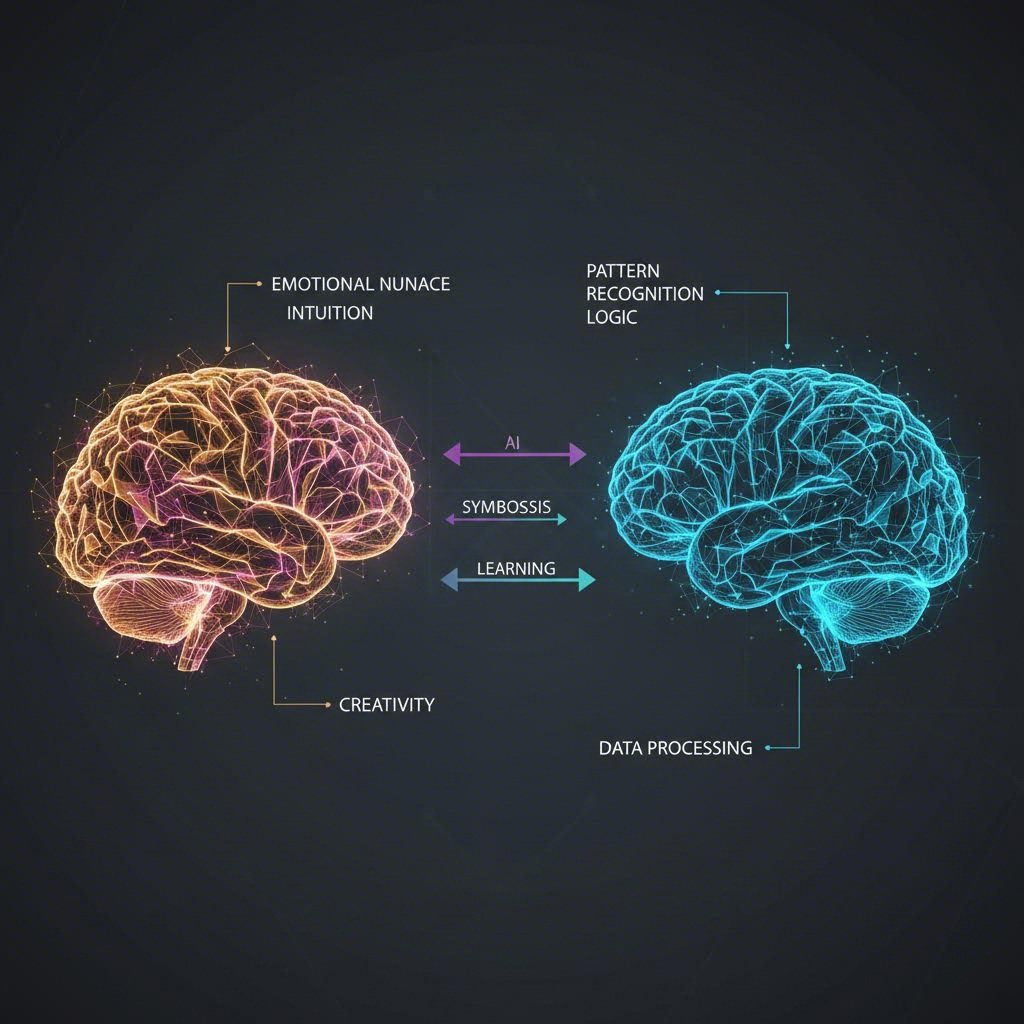
The debate isn't about AI replacing human writers but about collaboration. The future of content creation lies in a hybrid approach that leverages the strengths of both. AI is an incredibly powerful tool for efficiency and scale, while humans provide the indispensable creativity, strategy, and emotional intelligence that truly connects with an audience. The key is to understand which tasks are best suited for each.
For businesses and creators struggling with content creation bottlenecks, advanced platforms like BlogSpark's AI blog writer can transform ideas into engaging, SEO-optimized articles in minutes. By offering intelligent outlining and customizable brand voice, such tools empower marketers to scale high-quality content production. This exemplifies the hybrid model, where AI handles the heavy lifting of first drafts and data-heavy tasks, freeing up human writers to focus on what they do best: infusing content with personality and strategic insight.
Here’s a breakdown of when to use each resource:
| Best Use Cases for AI Writing | When Human Writers are Irreplaceable |
|---|---|
| Generating first drafts and outlines | Brand storytelling and thought leadership articles |
| Writing data-heavy reports or summaries | Crafting persuasive sales copy and landing pages |
| Creating product descriptions at scale | Writing opinion pieces or content requiring deep empathy |
| Brainstorming topics and keywords | Conducting interviews and writing case studies |
| Repurposing existing content for different formats | Final editing to ensure brand voice and emotional resonance |
Ultimately, as emphasized by sources like WSI World, a people-first approach to content is what resonates with both audiences and search engines. By using AI as a powerful assistant, writers and businesses can produce better content more efficiently, combining machine-like speed with an unmistakably human touch.
Frequently Asked Questions
1. How can you tell the difference between AI and human writing?
You can often tell the difference by looking for a lack of emotional depth, uniform sentence structure, and repetitive phrasing in AI writing. Human writing typically features more stylistic variety (burstiness), personal anecdotes, and creative language. While AI excels at grammar and structure, it often lacks the unique voice and nuanced perspective of a human author.
2. What is the 30% rule for AI?
The "30% rule" is a general guideline, particularly in academic and educational settings, suggesting that no more than 30% of a piece of work should be directly generated by AI. The goal is to encourage the use of AI as a supportive tool for brainstorming or drafting, while ensuring the final product is predominantly the result of human thought, editing, and originality.
3. How to tell if something is written by AI or a human?
Besides manual analysis of the text's tone, style, and content, you can use an AI detection tool. These tools analyze linguistic patterns to calculate the probability that the text was machine-generated. However, the most effective method combines manual review—checking for creativity, emotional nuance, and factual accuracy—with the technical analysis provided by a detector.