
TL;DR
You can check for AI in writing by using free online AI detectors and by performing a manual review. Tools like GPTZero and Grammarly's AI Detector analyze text for patterns common to AI. Manual checks involve looking for signs like a formulaic style, repetitive phrasing, and a lack of personal insight.
How AI Detection Tools Work
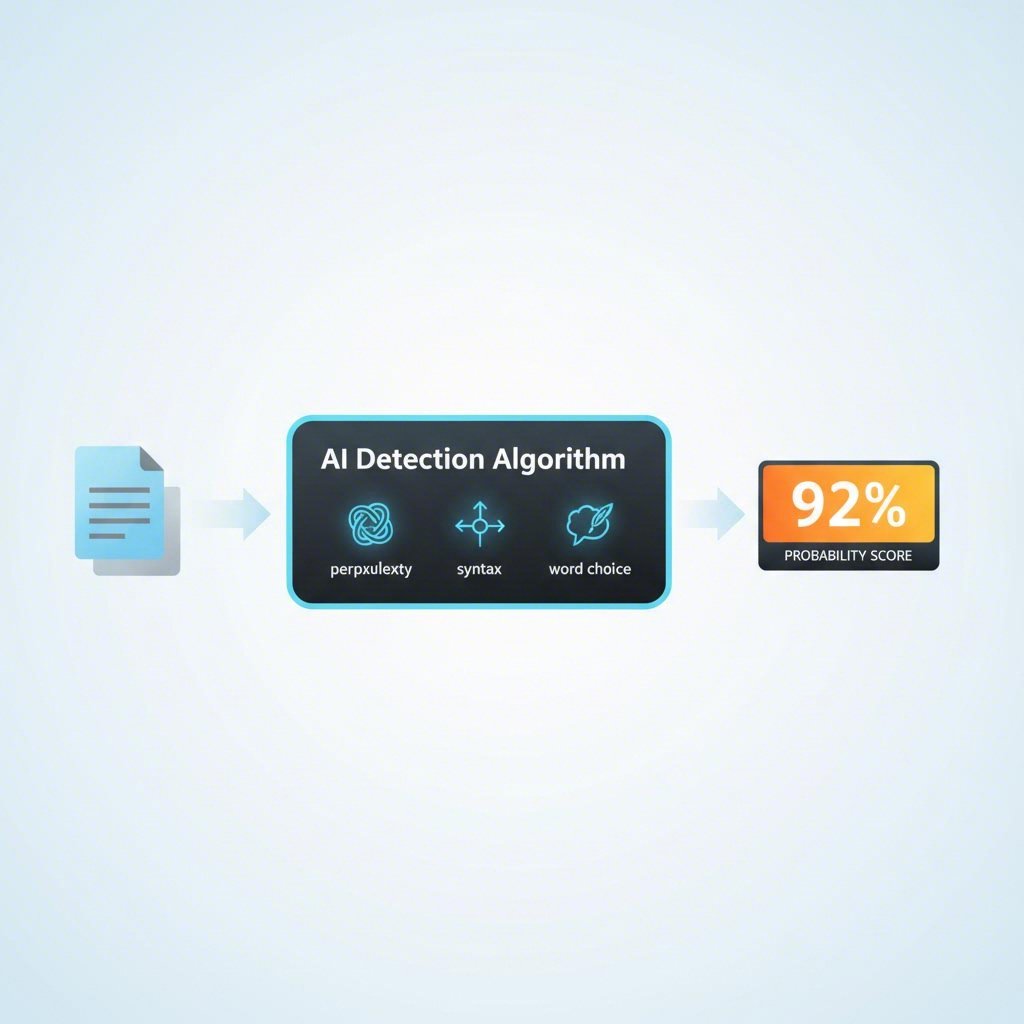
AI detection tools are designed to analyze a piece of writing and determine the probability that it was generated by an artificial intelligence model. These platforms don't search for copied content like a plagiarism checker. Instead, they look for the statistical fingerprints and linguistic patterns that are characteristic of large language models (LLMs) like ChatGPT, Gemini, and Claude. This process demystifies how it's possible to spot machine-generated text.
At their core, these detectors evaluate several key metrics. One primary factor is "perplexity," which measures how predictable or surprising the word choices are. Human writing tends to have higher perplexity, with more varied and sometimes unexpected language. In contrast, AI-generated text is often optimized for coherence and predictability, resulting in lower perplexity scores. Another metric is "burstiness," which analyzes the variation in sentence length and structure. Humans typically write with a natural rhythm, mixing short, punchy sentences with longer, more complex ones. AI models can sometimes produce text that is overly uniform in its structure.
Think of an AI detector as a tool that assesses writing style on a statistical level. It examines everything from grammatical structures and word frequency to punctuation habits. The tool compares these patterns to enormous datasets of both human and AI-generated writing it has been trained on. Based on this comparison, it calculates a probability score, often presented as a percentage, indicating the likelihood of AI authorship. It is important to remember that this is a probabilistic assessment, not a definitive verdict.
Top Free AI Checkers: A Comparative Look
For users looking to check for AI in writing online, several free and effective tools are available. These platforms offer a quick way to analyze text and get an initial assessment of its origin. Each tool has slightly different features and strengths, making some better suited for specific users like students, writers, or educators. Most operate on a simple model: you copy and paste your text, run the analysis, and interpret the resulting score.
The leading AI checkers are known for their ease of use and advanced algorithms. They can detect content from the most popular generative AI models and provide detailed feedback, sometimes highlighting specific sentences that appear to be machine-generated. This functionality helps users pinpoint areas that may need revision to ensure authenticity. Here is a comparison of some of the top options available:
| Tool | Key Feature | Models Detected | Best For |
|---|---|---|---|
| GPTZero | Sentence-by-sentence highlighting and in-depth results on AI probabilities. | ChatGPT, GPT-5, Gemini, Claude, Llama. | Educators and writers needing detailed analysis. |
| Grammarly AI Detector | Provides a clear percentage score and integrates with its writing assistant. | ChatGPT, Google Gemini, Claude. | Students and professionals already using the Grammarly ecosystem. |
| QuillBot AI Detector | Distinguishes between AI-generated, human-written, and AI-refined text. | ChatGPT, GPT-5, Gemini, Claude, Llama. | Users who need to understand how assistive tools were used. |
| Scribbr AI Detector | Offers paragraph-level feedback and multilingual support. | ChatGPT, Copilot, Gemini. | Students and academics working in multiple languages. |
Manual Detection: Spotting AI Writing Without a Tool
Beyond automated tools, human intuition remains a powerful method for identifying AI-generated content. Professors and editors often rely on manual review, looking for tell-tale signs that a piece of writing lacks a human touch. These indicators are not definitive proof, but a combination of them can raise a red flag and prompt further investigation. Developing an eye for these patterns can empower you to assess content authenticity without relying solely on a probability score.
One of the most common signs is a polished yet generic and formulaic style. AI-generated text often sounds knowledgeable but lacks genuine depth, personal insight, or original analysis. It might present well-structured paragraphs and perfect grammar, but the arguments can feel superficial and non-committal. If a writer who typically has a distinct, perhaps slightly flawed, style suddenly produces flawless but robotic prose, it's a significant indicator of AI assistance.
There are several specific characteristics to watch for during a manual review:
- Overused "AI Vocabulary": LLMs tend to favor certain words and phrases, such as "delve," "tapestry," "robust," "unveiling," and "in conclusion." While humans use these words, their overuse in a single document can be a sign of AI generation.
- Repetitive Sentence Structures: AI can fall into predictable patterns, such as starting consecutive sentences with the same transitional phrase or using a monotonous subject-verb-object structure.
- Lack of Nuance: AI often struggles with complex emotions, humor, and cultural subtleties. The writing might be technically correct but emotionally flat or contextually awkward.
- Factual Inconsistencies or Hallucinations: AI models can invent facts, statistics, or citations that look plausible but are entirely fabricated. Verifying sources is a critical step in manual detection.
- Perfectly Consistent Tone: Human writing naturally has slight variations in tone. An unwavering, perfectly consistent tone throughout a long piece of text can feel unnatural and machine-like.
The Limits of AI Detection: Accuracy and False Positives
While AI detectors are valuable, it is crucial to understand their limitations. No AI checker is 100% accurate. The technology exists in a constant arms race with the AI models it's designed to detect. As generative AI becomes more sophisticated, its output becomes more difficult to distinguish from human writing, challenging the effectiveness of detection tools.
One of the most significant issues is the occurrence of false positives, where human-written text is incorrectly flagged as being generated by AI. This can happen for several reasons. Writers who are non-native English speakers, or those who have a very formal and structured writing style, may be more likely to trigger a false positive because their patterns can mimic the predictability that detectors look for. This highlights the danger of relying exclusively on a tool's score to make definitive judgments about academic integrity or authorship.
Conversely, false negatives can also occur, where AI-generated text slips by undetected. This is especially true if the text has been edited by a human or processed through an "AI humanizer" tool designed to evade detection. Because of these inaccuracies, the results from an AI detector should be treated as a starting point for a more thorough investigation, not as conclusive evidence. The best practice is to combine the insights from a tool with a careful manual review, using the score as one piece of a larger puzzle.
As the line between human and machine writing blurs, some are shifting focus from detection to creation. For those looking to leverage AI for high-quality content from the start, advanced tools are emerging. Struggling with content creation bottlenecks? BlogSpark's advanced AI blog writer transforms your ideas into engaging, SEO-optimized, and original articles in minutes. It offers intelligent outlining, customizable brand voice, and seamless CMS integration, empowering marketers and creators to scale high-quality content effortlessly. Discover how to supercharge your content workflow at https://blogspark.ai/.

Frequently Asked Questions
1. Can it be checked if you used AI for writing?
Yes, it is possible to check if AI was used in writing through a combination of methods. Automated AI detection tools can scan text for linguistic patterns typical of AI models. Additionally, professors and editors often use manual review to look for signs like sudden shifts in writing style, generic arguments, or fabricated citations, which can indicate AI involvement. However, no single method is completely foolproof.
2. Is there a free AI detector?
Yes, there are many free AI detectors available online. Popular and reliable options include GPTZero, Grammarly's AI Detector, QuillBot's AI Detector, and Scribbr's AI Detector. These tools allow you to paste text and receive a probability score indicating the likelihood of AI generation, often with additional features like sentence highlighting.